How to manage vinyl siding color oxidation restoring polymer finishes
Architectural residential building envelopes depend on advanced polymer engineering to maintain structural weatherproofing and visual integrity across multi-decade operational lifecycles. How to manage vinyl siding color oxidation. Polyvinyl chloride wall panels serve as primary rain screens, defending underlying timber framing against wind-driven precipitation and ambient climate shifts. Over extended periods, continuous solar ultraviolet radiation alters the chemical structure of exterior polymer surfaces.
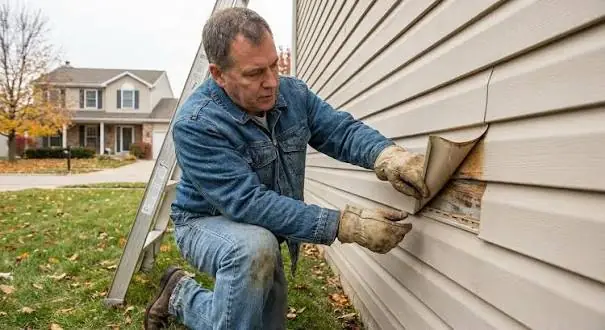
Solar energy breaks down chemical bonds within unplasticized polyvinyl chloride matrices, initiating photo-degradation across exposed elevation faces. This chemical breakdown creates a white, powdery residue known as surface chalking, which dulls original pigment intensity and creates unsightly streaks. Property stewards often mistake chalking for simple atmospheric dirt, attempting aggressive power washing that further damages protective outer capstocks.
Preserving exterior polymer finishes demands a thorough understanding of capstock chemistry, optical reflectance physics, chemical surfactant behavior, and long-term asset governance. Building care specialists evaluate surface oxidation through rigorous chemical and optical criteria rather than temporary cosmetic washing. This reference manual provides an analytical study of polymer photo-degradation, restoration methodologies, real-world execution scenarios, and ongoing asset management protocols across American residential architecture.
How to manage vinyl siding color oxidation
Learning how to manage vinyl siding color oxidation requires evaluating how ultraviolet radiation, atmospheric oxygen, ambient moisture, and surface temperatures interact across polymer capstocks. Building science experts analyze surface chalking as a progressive chemical transformation rather than a superficial dirt layer. A superficial remediation attempt relying on high-pressure water blasting strips protective acrylic coatings, exposing raw vinyl to accelerated UV breakdown.
Polymer Degradation Chemistry and Solar Mechanics
Ultraviolet photons strike exterior panel surfaces, breaking titanium dioxide bonds and polymer chain linkages inside vinyl formulations. Free radicals form during photo-oxidation, reacting with atmospheric oxygen to produce water-soluble degradation products. Titanium dioxide particles separate from the resin matrix, rising to the panel surface to form the characteristic white chalk film.
Spectrophotometric Color Measurement and Optical Tracking
Quantifying surface oxidation severity requires objective optical measurement rather than subjective visual estimates. Spectrophotometers measure reflected light waves across CIELAB color space coordinates, calculating delta-E values that represent total color deviation from baseline conditions. Tracking delta-E shifts enables facility managers to schedule timely chemical washes before permanent capstock erosion occurs.
Deep Contextual Background
Exterior building maintenance transformed significantly as engineered synthetic polymers replaced painted timber clapboards across residential developments. Early synthetic panel formulations during the mid-twentieth century contained minimal chemical stabilizers, causing rapid surface chalking and severe pigment fading within five years of installation. Property owners routinely replaced chalked panels, generating substantial landfill waste and driving up lifecycle property costs.
Historical Evolution of Polymer Pigment Stabilization
Chemical engineers resolved early durability limitations by introducing titanium dioxide light stabilizers, organotin heat compounds, and acrylic capstocks. Co-extruding Acrylonitrile-Styrene-Acrylate (ASAASA) capstocks over rigid vinyl cores established a resilient ultraviolet shield that slowed photo-degradation significantly. Modern pigment chemistry incorporates heat-reflective infrared pigments, allowing dark panels to reflect invisible heat waves while resisting surface oxidation under intense sunlight.
Contemporary Capstock Formulation Standards
Modern manufacturing standards mandate strict compliance with ASTM D3679 physical performance guidelines and UV weathering benchmarks. Tested panel formulations must maintain color integrity within specified delta-E limits across multi-year accelerated outdoor weathering tests. Today, professional maintenance managers utilize specialized soft-wash surfactants, chelating agents, and acrylic restoration coatings to manage residual surface chalking without replacing sound structural wall panels.
Conceptual Frameworks and Mental Models
Evaluating polymer surface restoration demands structured analytical models that synthesize chemical oxidation rates, optical physics, and surfactant mechanics into practical maintenance rules.
The Capstock Photodegradation Decay Framework
This framework tracks polymer degradation across three distinct operational phases: initiation, propagation, and chalk accumulation. Initiation occurs as UV radiation creates initial surface free radicals without visible color change. Propagation accelerates chemical bond breakage, releasing titanium dioxide particles that form surface chalking. Managing oxidation during early propagation prevents severe capstock erosion.
The Surfactant-Mediated Chemical Emulsification Model
This model replaces destructive mechanical force with calibrated chemical washing action. Specialized chelating surfactants break electro-static bonds holding oxidation powder to vinyl surfaces, allowing gentle low-pressure water streams to rinse away degradation residue. Emulsifying surface chalk chemically preserves microscopic capstock textures without gouging panel faces.
The Substrate Hydrophobic Shield Concept
Applying micro-thin silicone or acrylic sealers post-washing creates a breathable hydrophobic barrier over restored polymer surfaces. The transparent seal repels liquid water, reflects solar UV rays, and seals micro-porous vinyl resin spaces. Restoring surface density prevents airborne moisture from accelerating secondary photo-oxidation across exposed elevations.
Key Categories or Variations
Categorizing oxidation management strategies enables property managers to match chemical treatment protocols with specific degradation severity levels and capstock formulations.
Low-Pressure Surfactant Chemical Washing
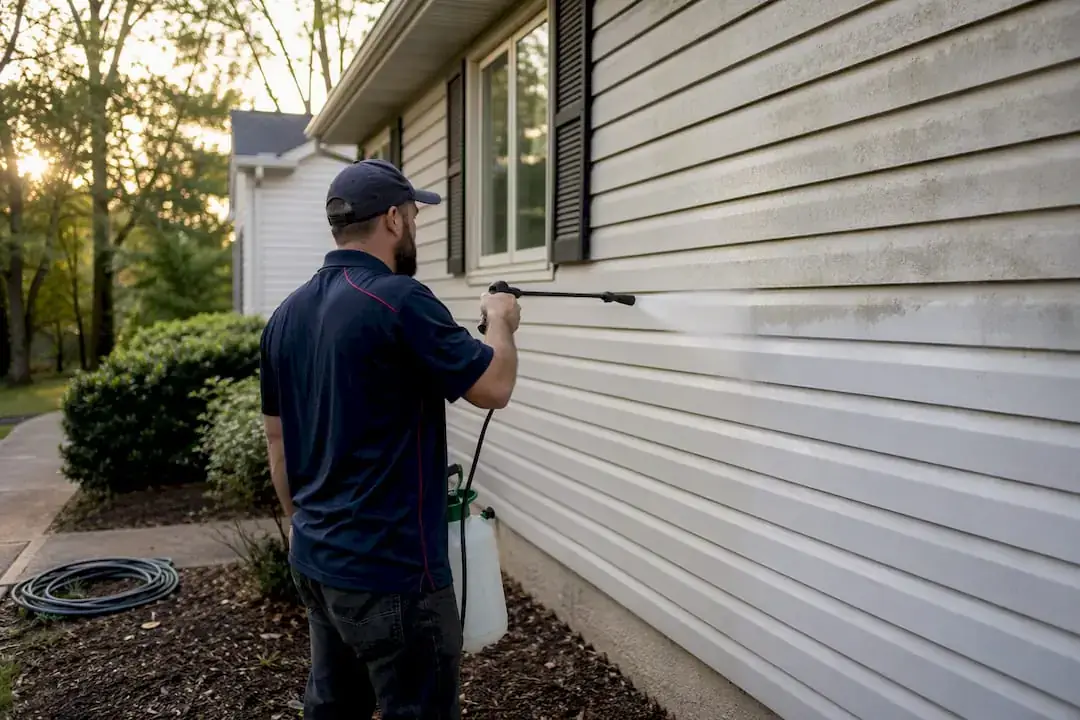
Low-pressure surfactant washing utilizes diluted sodium metasilicate or specialized polymer cleaners applied at pressures below three hundred pounds per square inch. Chemical surfactants dissolve surface oxidation film gently, allowing clean water rinses to restore original color depth without scratching panel capstocks.
Mild Acidic Chemical Neutralization
Severe chalk accumulation featuring calcium mineral deposits requires mild oxalic or citric acid washes. Acidic formulations dissolve stubborn mineral bonds, releasing embedded chalk particles while neutralizing alkaline soil residues along lower wall courses.
Mechanical Soft-Bristle Agitation
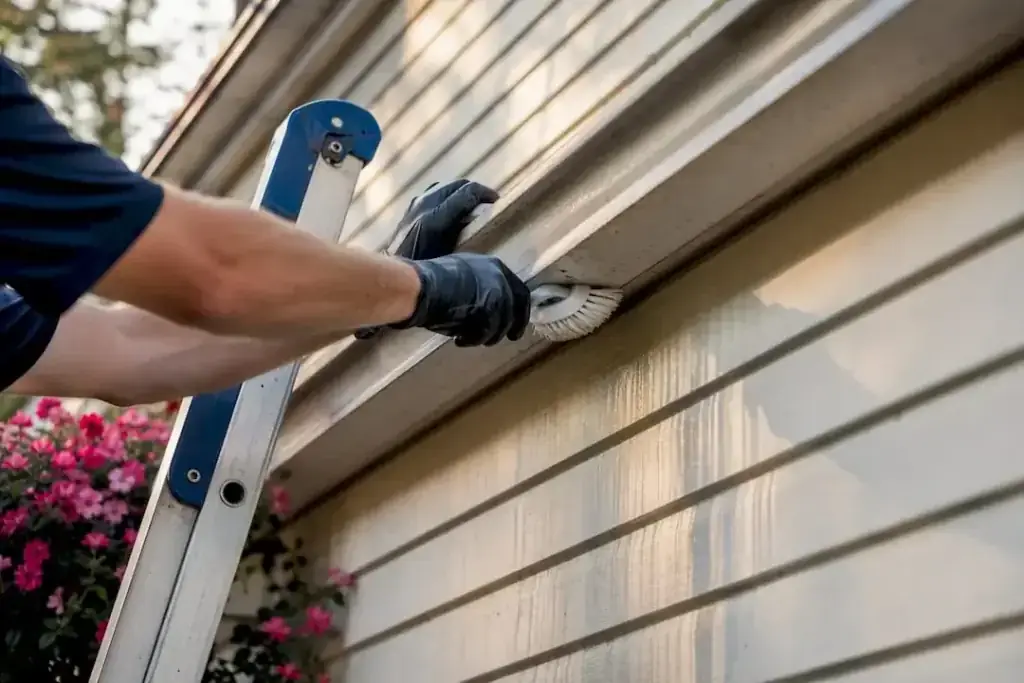
Heavy oxidation layers require mild mechanical assistance using soft flagged-bristle wash brushes. Technicians apply specialized cleaning solutions, agitating surface chalk lightly to loosen stubborn powder before performing a low-pressure rinse.
Penetrating Polymer Sealer Application
Restoring aged vinyl panels that have lost surface gloss involves applying clear, penetrating acrylic or silicone sealers. Penetrating sealers fill micro-porous surface voids, bonding loose pigments and restoring rich color saturation across sun-faded elevations.
Specialty Vinyl-Safe Repainting Systems
When capstock erosion reaches underlying vinyl cores, painting becomes necessary to restore visual uniformity. Specialized vinyl-safe paints formulated with heat-reflective pigments prevent thermal heat distortion while providing a durable UV-resistant exterior finish.
Oxidation Remediation Strategy Taxonomy
Decision Logic for Oxidation Management
Selecting an appropriate restoration strategy requires evaluating surface chalking depth and remaining capstock thickness. Light powdering on south elevations responds fully to low-pressure surfactant washing followed by a clear polymer sealer application. Severe capstock erosion exposing raw, un-pigmented vinyl substrate demands specialized vinyl-safe repainting to restore UV protection and visual balance.
Detailed Real-World Scenarios How to manage vinyl siding color oxidation
Analyzing practical property maintenance projects demonstrates how technical restoration principles adapt to localized solar exposure, microclimates, and variable capstock degradation levels.
High-UV South Elevation Capstock Restoration
A two-story suburban residence in Colorado experienced heavy white chalking exclusively across its south-facing elevation due to intense high-altitude solar radiation. Maintenance technicians applied a sodium metasilicate surfactant wash, agitating the surface gently with soft flagged brushes before performing a low-pressure downward rinse. Technicians then applied a clear acrylic polymer sealer, restoring deep tan color saturation and protecting the capstock against UV breakdown.
Desert Southwest Thermal Oxidation Overhaul
A custom home in Arizona developed severe color fading and surface chalking across dark bronze wall sections exposed to extreme summer solar heat. Spectrophotometer testing revealed significant color deviation beyond acceptable delta-E thresholds. Restoration crews washed the facade using mild acidic cleaners to remove baked-on chalk, followed by two coats of vinyl-safe acrylic paint containing heat-reflective cool pigments, lowering surface temperatures and restoring original aesthetics.
Coastal Salt-Air Accelerated Degradation
A oceanfront property in North Carolina suffered from accelerated chalking combined with salt-crust accumulation along east-facing ocean elevations. Salt crystals acted as microscopic lenses, concentrating solar rays and accelerating capstock photo-degradation. Crews flushed wall faces with fresh water, applied a specialized chelating surfactant wash to dissolve salt deposits, and sealed restored surfaces with a hydrophobic marine-grade polymer coating.
Shaded North Elevation Mold and Oxidation Synthesis
A residential building in Oregon exhibited a complex degradation pattern on north elevations, where heavy green algae grew over light surface chalking. Applying bleach alone killed algae but left chalky white streaks behind. Technicians implemented a two-step process: applying a diluted sodium hypochlorite soft-wash to neutralize biological growth, followed by a metasilicate surfactant wash to remove underlying chalk film safely.
Planning, Cost, and Resource Dynamics
Financial management for exterior polymer restoration extends beyond basic cleaning chemical purchases. Comprehensive budgeting accounts for specialized chemical costs, spectrophotometric audits, trade labor skills, landscaping protection, and long-term asset value preservation.
Oxidation Management Capital Allocation
Direct expenses include specialized surfactant cleaners, chelating agents, neutralizer rinses, penetrating acrylic sealers, vinyl-safe paints, soft-bristle brushes, and low-pressure spray equipment. Indirect costs cover municipal wastewater containment permits, site safety staging, plant protection covers, and professional quality assurance auditing.
Long-Term Asset Valuation and Lifecycle Financials
Ignoring surface oxidation allows UV radiation to erode capstocks completely, forcing premature panel replacements that cost tens of thousands of dollars. Investing in proactive chemical washing and polymer sealing every five years costs a fraction of complete panel replacement while extending siding service life indefinitely.
Expenditure Matrix
Tools, Strategies, and Support Systems
Executing precise polymer surface restoration requires specialized application equipment, digital diagnostic tools, and structured quality control frameworks.
Diagnostic and Spectrophotometric Tooling
Technicians rely on handheld spectrophotometers, digital surface gloss meters, water quality total dissolved solids (TDSTDS) meters, and electronic moisture meters. Spectrophotometers record exact CIELAB color coordinates pre- and post-treatment, confirming that oxidation removal restores true baseline pigment values.
Specialized Chemical Application Equipment
Dedicated low-pressure chemical pumps deliver surfactant solutions at broad, gentle spray patterns below one hundred pounds per square inch. Utilizing low-pressure delivery systems allows cleaning solutions to saturate surface chalk evenly without forcing water past interlocked panel lap seams.
Documented Quality Control Registers
Project managers use standardized quality control registers to record pre-wash color coordinates, chemical dilution ratios, dwell times, rinse pressures, and post-sealer gloss readings. Documenting these checks maintains manufacturer capstock warranty validity over multi-decade operational cycles.
Risk Landscape and Failure Modes How to manage vinyl siding color oxidation
Deviating from established chemical restoration standards introduces severe surface damage risks. Identifying potential failure pathways enables quality control teams to protect building envelope integrity during maintenance.
Compounding Capstock Degradation Hazards
Failing to remove chalking before applying surface sealers traps powdery residue beneath the transparent coating. Trapped chalk turns milky white under moisture exposure, causing cloudy surface patches that require complete chemical stripping.
Abrasive Erosion and Micro-Grooving
Using high-pressure power washing or stiff wire brushes gouges flexible polymer capstocks, creating microscopic grooves across panel faces. Scratched surfaces trap environmental soot rapidly, causing accelerated re-soiling and permanent gloss loss.
Solvent Etching and Pigment Bleaching
Applying un-buffered harsh chemical solvents or concentrated acid washes burns acrylic capstocks, creating permanent white streak stains. Chemical etching destroys pigment uniformity, leaving patchy wall elevations that require full repainting.
Governance, Maintenance, and Long-Term Adaptation
Preserving building envelope aesthetic performance requires systematic maintenance routines and scheduled inspection protocols. Establishing clear operational management plans extends cladding service life.
Routine Surface Oxidation Surveillance Protocols
Facility managers should conduct visual exterior inspections annually during clear mid-day conditions, performing a simple velvet-cloth swipe test across south and west elevations. If white powder transfers to the cloth, surface chalking has initiated and requires scheduling a low-pressure surfactant wash.
Corrective Remediation Trigger Thresholds
Immediate chemical maintenance is triggered when spectrophotometer readings indicate delta-E color shifts exceeding 3.0 units from baseline standards. Washing and sealing panels promptly restores optical reflectance before UV rays breach protective capstocks.
Layered Preservation Checklist
-
Swipe south and west wall elevations with a dark cloth annually to detect chalking film.
-
Pre-wet all surrounding foliage with fresh water prior to applying cleaning chemicals.
-
Apply surfactant cleaning solutions at pressures strictly below 300 PSI.
-
Rinse wall surfaces thoroughly using downward spray angles to protect lap seams.
-
Apply a clear penetrating acrylic sealer every five years to lock in surface pigments.
Measurement, Tracking, and Evaluation How to manage vinyl siding color oxidation
Evaluating the success of a polymer surface restoration program involves tracking optical color metrics, chemical application logs, and long-term property value records.
Quality Control Asset Indicators
Leading performance indicators include contractor compliance with low-pressure washing standards, verified chemical dilution ratios, and post-treatment spectrophotometer delta-E readings below 1.5 units.
Lagging Property Performance Signals
Lagging metrics track long-term project success, including preserved capstock gloss coordinates, zero micro-fissure formation, and extended siding service lifecycles over ten-year monitoring intervals.
Project Tracking Documentation
-
Spectrophotometric Baseline Audit Log: Recorded CIELAB color coordinates establishing reference pigment values post-installation.
-
Chemical Treatment Register: Signed verification forms documenting surfactant types, dilution ratios, dwell times, and rinse pressures.
-
Post-Restoration Gloss Log: Digital gloss meter readings verifying uniform surface reflectance across all treated elevations.
Common Misconceptions and Oversimplifications
Persistent myths regarding synthetic cladding oxidation often lead property owners and maintenance crews to make improper restoration choices.
Correcting Polymer Oxidation Myths
-
High Pressure Is Necessary to Remove Vinyl Oxidation: High pressure gouges acrylic capstocks and forces water behind panels; low-pressure chemical surfactants dissolve chalk safely and effectively.
-
Oxidized Vinyl Siding Must Be Replaced Immediately: Surface chalking is a manageable exterior byproduct; chemical washing and polymer sealers restore chalked panels to like-new condition.
-
Bleach Removes Vinyl Siding Oxidation Powder: Bleach kills organic mold but does nothing to dissolve inorganic titanium dioxide chalk; metasilicate surfactants are required to clean oxidation.
-
Vinyl Siding Can Never Be Painted Safely: Modern vinyl-safe acrylic paints formulated with heat-reflective pigments allow faded vinyl to be repainted safely without heat warping risks.
-
All Exterior Cleaning Contractors Understand Polymer Chemistry: Quality varies widely among wash crews; verifying low-pressure soft-wash equipment usage and chemical selection is essential.
Ethical, Practical, and Contextual Considerations
Responsible facility management balances immediate cosmetic restoration goals with environmental protection, job-site safety, and neighborhood property preservation. Chemical runoff generated during oxidation removal should be collected or neutralized before entering municipal storm drains. Partnering with contractors who utilize biodegradable surfactants and enforce strict plant protection protocols reduces local environmental impacts. Furthermore, preserving vibrant exterior wall finishes supports neighborhood visual harmony and maintains regional property values over time.
Conclusion
Successfully managing polymer surface oxidation requires a thorough understanding of capstock chemistry, optical reflectance physics, soft-wash application mechanics, and building science principles. By evaluating maintenance quality through structured operational frameworks, property managers achieve maximum surface cleanliness without compromising structural integrity or weather tightness. Standardizing pre-wash site preparation, enforcing low-pressure spray limits, maintaining downward rinse angles, and applying protective polymer sealers preserve capital investments. Investing in trained restoration professionals, disciplined contractor oversight, and proactive asset governance delivers resilient exterior wall protection, vibrant color depth, and lasting property value across changing climate exposures.